English| EUR
Suggested for you
More currencies
Choose a language
The limousine journey from Hanoi to Sapa covers approximately 320 kilometers through northern Vietnam's mountainous terrain. Understanding actual travel durations helps you choose departure times that align with your accommodation check-in and daylight arrival preferences. This guide answers the core timing question with verified figures and the variables that affect them.
Quick answer
The Hanoi to Sapa limousine travel time typically ranges from 5 to 6 hours for direct services. Most operators schedule 5.5-hour journeys under normal conditions, though weather, road works on National Route 4D, and seasonal traffic through Lao Cai Province can extend the duration by 30 to 60 minutes. Services departing between 06:00 and 14:00 ensure arrival before dark, which matters for safer mountain driving and easier hotel navigation.
Limousine operators market the route as a five-hour transfer, but the figure omits rest stops and the reality of ascending 1,500 meters through the Hoang Lien Son range. The highway from Hanoi to Lao Cai city runs smooth and fast for the first 250 kilometers, consuming roughly three hours. The final 38-kilometer climb to Sapa town introduces hairpin bends, occasional livestock crossings, and speed restrictions that add another 90 minutes minimum. Drivers who promise sub-five-hour arrivals either skip the mandatory rest break or rely on conditions that rarely align. Weather reshapes the journey clock. Fog blankets the mountain passes between November and March, forcing cautious speeds that can stretch the trip past six hours. Summer rain softens road shoulders and triggers small landslides that close lanes for clearing. Even in dry seasons, weekend and holiday traffic queues form at the Lao Cai checkpoint, where coaches and private vehicles merge into Sapa's single approach road. Services departing Hanoi after 15:00 risk arriving after dark, when unlit mountain curves and limited signage complicate the final ascent. The limousine travel time from Hanoi to Sapa also depends on pickup logistics. Operators collecting passengers from multiple Old Quarter hotels add 20 to 40 minutes before reaching the highway. Direct boarding at a central departure point eliminates this variable. Return journeys descending to Hanoi often clock 30 minutes faster due to gravity-assisted driving and lighter uphill traffic, though departure-time congestion in Sapa town can erase that advantage. Realistic trip planning allocates six hours door-to-door and treats early arrival as a bonus rather than an expectation. The 320-kilometer route has no meaningful shortcuts. Proposals for a Hanoi-Lao Cai expressway remain in feasibility studies as of 2026, leaving National Route 4D as the sole practical corridor. Operators using newer limousine coaches with reclining seats and onboard facilities maintain steadier speeds than older buses making frequent comfort stops, but road geometry ultimately governs pace. Choosing a morning departure guarantees daylight for the scenic upper stretch and positions you for mid-afternoon hotel check-in, avoiding the bottleneck of multiple coaches arriving simultaneously at Sapa's central square.
“The highway from Hanoi to Lao Cai city runs smooth and fast for the first 250 kilometers, consuming roughly three hours, but the final 38-kilometer climb to Sapa town introduces hairpin bends and speed restrictions that add another 90 minutes minimum.”
This itinerary outlines the progression of a typical limousine journey from Hanoi to Sapa, suited for travelers planning a 5–6 hour mountain transfer.
Your limousine collects passengers from Old Quarter hotels and makes its way to the highway exit. Early departure ensures you arrive before dark.
The route heads northwest through flat agricultural plains and industrial towns. Expect one rest stop around Phu Tho for refreshments and restrooms.
The road begins climbing into Hoang Lien Son range with switchbacks and changing elevation. Scenery shifts to terraced rice fields and forested slopes.
Most operators pause at a roadside facility near Nghia Lo or Than Uyen for lunch and leg stretching. The air becomes noticeably cooler.
The steepest section winds through pine forests and cloud cover, with views opening toward the valley below. Road conditions vary with weather and season.
The journey from Hanoi to Sapa is primarily facilitated by the Noi Bai–Lao Cai Expressway, which significantly reduces travel time compared to older national roads. Limousine services utilize this direct motorway to optimize efficiency between the capital and the Lao Cai Province.
Noi Bai–Lao Cai Expressway (CT05) via Lao Cai City
Noi Bai–Lao Cai Expressway (CT05) to National Route 4D
Noi Bai–Lao Cai Expressway (CT05)
Departing within the window of 06:00–14:00 is recommended to ensure arrival in Sapa before dark, as visibility decreases significantly during the final mountain ascent on National Route 4D.
Prepare for the five to six-hour journey with these essentials tailored to mountain road conditions.
Everything you need to know about hanoi to sapa limousine travel time
The typical travel duration for this route is approximately 5.5 to 6 hours depending on traffic conditions and weather. This limousine service provides a direct connection between the capital and the northern highlands.
Yes, the actual transit duration can fluctuate based on the specific highway route and road construction in the Lao Cai province. Travelers should account for potential delays caused by seasonal mountain weather conditions.
Because the route involves winding mountain roads, the best arrival window is between 06:00 and 14:00 to ensure travel occurs during daylight. Avoiding night transit is recommended for safer driving conditions on steep inclines.
The recommended arrival period is between 06:00 and 14:00 to ensure your vehicle reaches the town before dark. This window helps travelers navigate the final ascent into the mountains with better visibility.
Most private transport services include one or two short pit stops at designated rest areas along the expressway. These breaks allow passengers to stretch and access facilities before completing the final mountain climb.
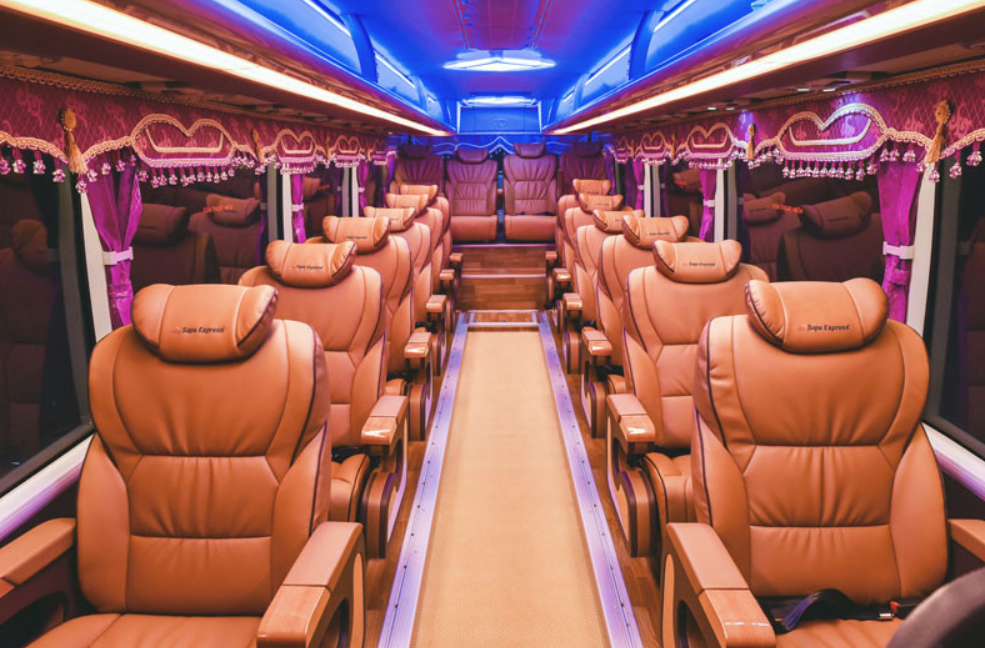
Limousines are generally faster and more comfortable than standard public buses due to fewer pickup stops and a more direct itinerary. The optimized vehicle design and professional driving standards help ensure a consistent transit experience.
To prepare for your trip, ensure you have your booking information ready and arrive at your pickup point early. Monitoring weather updates for the Lao Cai region is also useful for a smoother transit experience.